Thieboudienne: the authentic recipe of Senegal's national dish
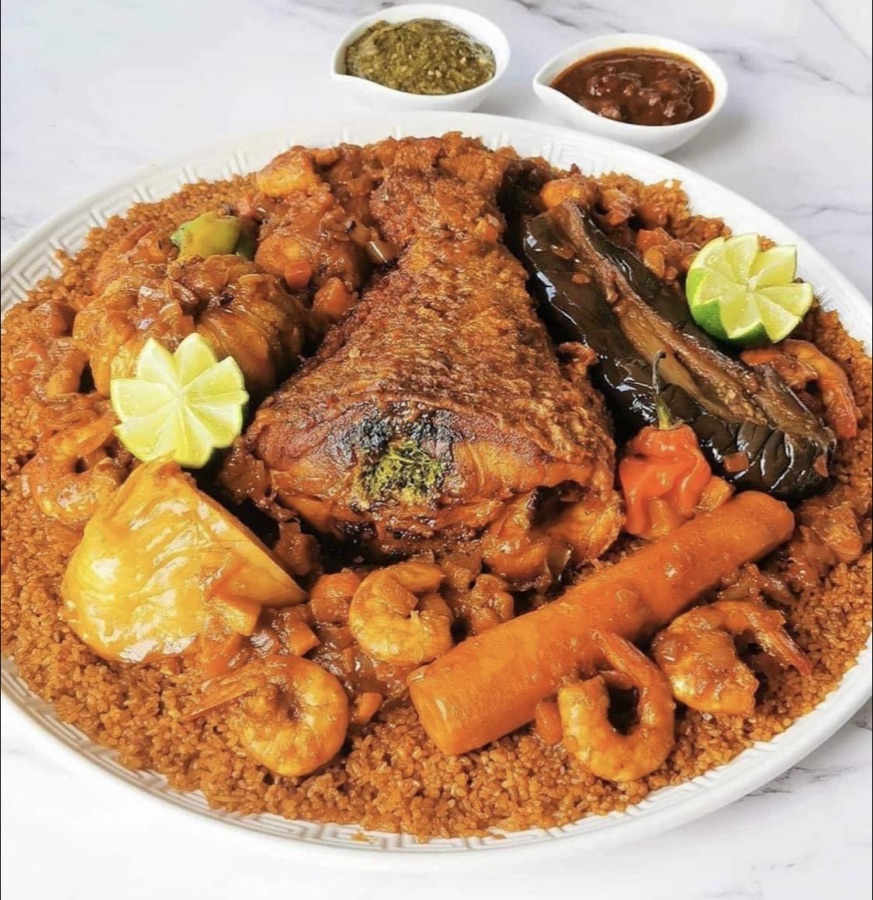
In short: thieboudienne (ceebu jën in Wolof) is Senegal's national dish: rice cooked in a tomato and fish broth, served with fish and vegetables. It has been UNESCO intangible cultural heritage since 2021. What makes it thieboudienne rather than “rice and fish” are three seasonings: guedj, yeet and netetou.
My name is Lamine Faye, people call me the Guedjologue. I grew up in the Îles du Saloum, in the Saloum Delta, where thieboudienne is made with ingredients you find nowhere else. Here is the real recipe, the one we cook in Senegal.
Where does thieboudienne come from? Saint-Louis
Thieboudienne was born in Saint-Louis, Senegal's former capital, in the fishing communities of the island. That is what UNESCO records in its 2021 listing. Tradition attributes the recipe to Penda Mbaye, a cook from Guet Ndar, the fishermen's district, in the 19th century. In colonial times, broken rice from Indochina replaced local grains: it became the base of the dish.
The secret ingredients
Guedj: dried and fermented fish. It gives the deep umami flavour. One small piece is enough.
Yeet: dried and fermented cymbium, a big sea snail, nicknamed the African Maggi.
Netetou: fermented néré seeds, the dawadawa of Ghana and Nigeria. A 100 % natural flavour enhancer that replaces stock cubes.
Ingredients (6 people)
- 1.5 kg fresh firm fish (thiof, capitaine or similar)
- 1 piece of guedj (dried fermented fish)
- 1 piece of yeet (dried cymbium)
- 1 tablespoon of netetou (dawadawa)
- 1 kg broken rice
- 200 ml vegetable oil
- 3 tablespoons tomato paste
- 2 onions
- 4 garlic cloves
- 1 bunch of parsley
- Chilli paste, salt, pepper
- 1 piece of tamarind
- 1 bitter African eggplant (diakhatou)
- 2 carrots
- 1 piece of cabbage
- 1 piece of cassava
- 2 turnips
- 1 handful of okra
Step by step
- Make the stuffing (roff). Blend or pound parsley, garlic, onion, chilli, salt, pepper and a little netetou. Cut 3 or 4 deep slits on each side of the fish and fill them generously with the stuffing.
- Sear the fish. Heat the oil in a large pot. Brown the stuffed fish on both sides without moving it too much so it doesn't break. Set aside.
- Build the sauce. In the same oil, fry the sliced onions. Add the tomato paste and let it catch for 90 seconds until brick-coloured, then deglaze. Add the guedj and the yeet, cover with about 2 litres of water and simmer for 20 minutes.
- Add the vegetables. Add them by cooking time: cassava and carrots first, cabbage and turnips 10 minutes later, then the bitter eggplant and okra 5 minutes later. Put the fish back and simmer 25 minutes. Taste and adjust the salt.
- Cook the rice in the broth. Take out the fish and vegetables and keep them warm. Strain the broth: you need about twice the volume of rice. Add the washed broken rice, cook until the liquid is absorbed, then cover the pot with a clean cloth and the lid and leave 10 minutes without opening.
- Serve. Spread the rice in a large round dish, place the fish in the centre and the vegetables around it. Serve with lime and chilli paste. We eat together, around the dish.
The Guedjologue's 3 secret gestures
1. Toast the tomato. Let the tomato paste catch in the hot oil for 90 seconds until it turns brick-coloured, then deglaze. It multiplies the aroma and tames the acidity.
2. Flavour the broth before the rice. Forget cubes. The real secret is the ancestral trio: yeet, netetou, bay leaf. Golden rule: good broth, good rice.
3. Steam it under a cloth. When the rice has absorbed the broth, put a clean cloth over the pot, then the lid. Ten minutes, no peeking. The steam finishes the cooking: separate, shiny grains.
Red or white thieboudienne
This recipe is the red thieboudienne, the best known, made with tomato paste. The white version, thiebou wekh, uses fresh tomato instead: a lighter sauce. Both use guedj and yeet.
No palm oil, and broken rice
Contrary to a common belief, red palm oil does not go into thieboudienne: it is cooked with vegetable oil, and the colour comes from the tomato. And it is made with broken rice, not basmati or long-grain rice.
Where to find the ingredients
Guedj, yeet and netetou are not in supermarkets. That is why I created Louma by Seggfaye: I source directly from the fishermen and the women processors of the Îles du Saloum, with no middlemen.
Shipping: France and Europe from our online shop. UK from €18.99, the Americas and Asia from €35.19 with Colissimo International (tracked). See all shipping rates. We do not ship to Africa.
Order the ingredients on WhatsAppSee the shop
Frequently asked questions
What is thieboudienne?
Senegal's national dish: rice cooked in a tomato and fish broth, served with fish and vegetables. In Wolof, “thieb” means rice and “dienne” means fish. It is listed by UNESCO as intangible cultural heritage since 2021.
How do you spell it?
Thieboudienne, thiéboudienne, thiebou dieune, tieboudiene, or in Wolof spelling ceebu jën. Many people simply say thieb.
What is the difference between thieboudienne and jollof rice?
Both are West African tomato rice dishes, but thieboudienne is cooked with fish and seasoned with dried fermented seafood (guedj, yeet) and netetou, and the rice is cooked in the fish broth. Tradition places its birth in Saint-Louis, Senegal.
Does thieboudienne use palm oil?
No. It is cooked with vegetable oil. The red-orange colour of the rice comes only from tomato.
Which rice for thieboudienne?
Broken rice, not basmati or long-grain rice. Broken rice absorbs the broth better and gives the right texture.
Read next
Senegalese food: the dishes you need to know